Navigating scholarly research requires balancing literature reviews, data collection, citation management, and academic writing. Whether preparing a master’s thesis, a doctoral dissertation, or drafting journal articles, having the right digital infrastructure makes the process significantly more efficient.
This comprehensive guide organizes essential platforms, open-access archives, e-learning initiatives, and AI-assisted workflow utilities into functional categories.
1. Academic Search Engines & Literature Discovery
Locating peer-reviewed literature across interdisciplinary and specialized fields is the foundation of any study.
- Google Scholar: Universal search engine for academic papers, theses, court opinions, and book citations.
- PubMed Central (PMC): Free digital repository providing access to full-text biomedical and life sciences journal articles.
- Web of Science: Comprehensive citation database providing indexed multidisciplinary literature and citation tracking (institutional subscription).
- Scopus: Curated abstract and citation database from Elsevier covering science, technology, medicine, and social sciences.
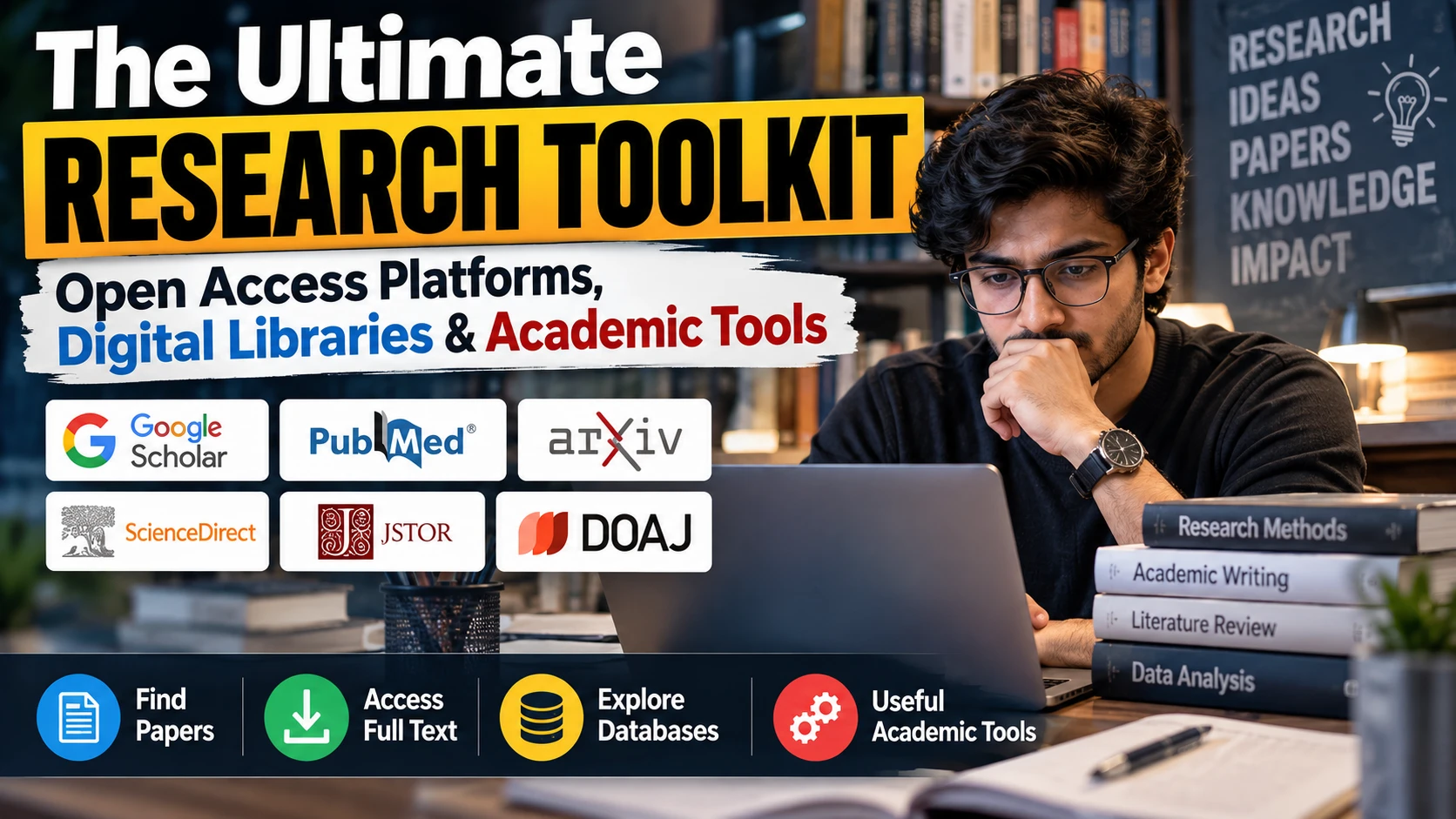
- JSTOR: Digital library of academic journals, books, and primary sources in humanities and social sciences, featuring open-access and community-subscribed items.
- Directory of Open Access Journals (DOAJ): Curated community database indexing high-quality, peer-reviewed, open-access journals globally.
- ScienceOpen: Interactive discovery platform with millions of articles and advanced network visualization.
- ERIC (Education Resources Information Center): Premier digital database for educational research and curriculum literature.
- JURN: Specialized academic search index dedicated to free open-access journals and theses across arts, humanities, and sciences.
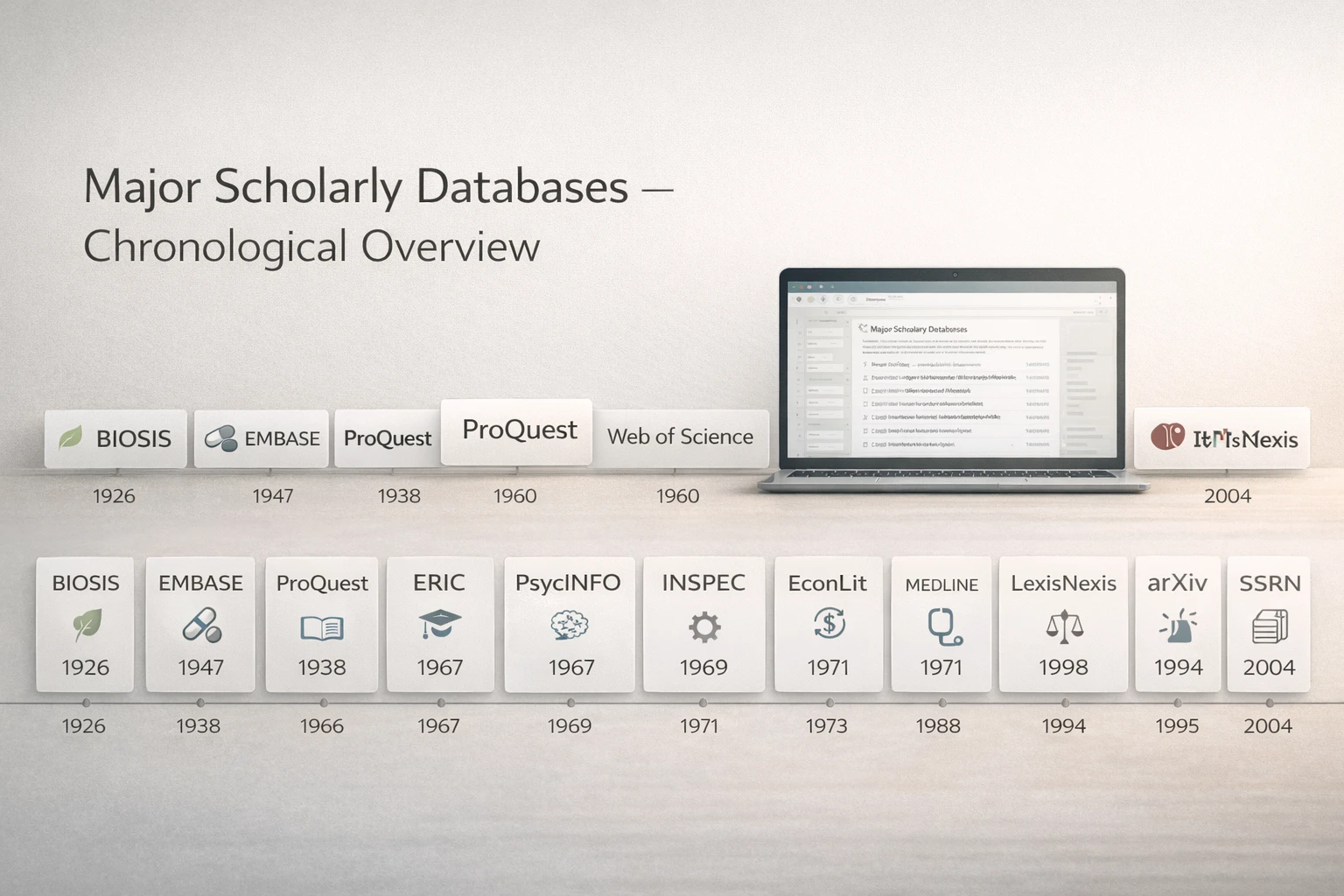
- Social Science Research Network (SSRN): Pre-print server and global repository for rapid dissemination of social sciences and humanities research.
2. AI-Powered Discovery & Paper Summarization
AI-based research engines map intellectual lineage, highlight core hypotheses, and streamline reading lists.
- Elicit: AI research assistant that extracts findings directly from peer-reviewed papers to build synthesis tables.
- Research Rabbit: “Spotify for papers”—maps citation networks visually to trace foundational and recent research.
- Litmaps: Visual discovery tool generating interactive citation maps and automated alerts for new relevant publications.
- Scholarcy: AI-powered article summarizer breaking dense research papers into digestible, key-fact summary cards.
- Paper Digest: Platform extracting executive summaries, core claims, and takeaways from literature.
- Resoomer: Text summary tool built to filter main arguments from argumentative, scientific, and educational texts.
- Scite: Smart citation platform indicating whether subsequent publications supported, mentioned, or contrasted a study’s findings.
3. Reference Management & Citation Tools
Organize PDFs, annotate full texts, and format bibliographies in APA, MLA, Chicago, IEEE, or thousands of other standard styles.
- Zotero: Free, open-source reference manager with robust browser extensions and word processor integrations.
- Mendeley: Elsevier’s free reference manager and academic collaboration platform.
- EndNote: Industry-standard reference manager for teams and institutions handling complex bibliographies.
- RefWorks: Cloud-based web reference tool widely integrated with university libraries.
- Citavi: Comprehensive reference management combined with knowledge organization and task planning.
- EasyBib / BibMe: Online bibliography builders for fast manual citation generation.
4. Academic Writing, Editing & Plagiarism Detection
Writing clear prose and maintaining academic integrity requires careful drafting, revision, and verification.
- Overleaf: Cloud-based, collaborative LaTeX editor for STEM manuscripts and mathematical typesetting.
- Paperpal: Real-time academic writing assistant tailored specifically to scholarly manuscripts and journal standards.
- Grammarly: Grammar, style, and tone improvement platform.
- Hemingway Editor: Free editing app highlighting passive voice, complex sentence structures, and readability issues.
- QuillBot: Writing tool offering paraphrasing, tone adjustments, and vocabulary suggestions.
- ProWritingAid: Detailed writing analyzer checking pacing, repetition, and readability.
- Scrivener: Long-form writing application tailored for organizing thesis drafts and dissertations.
- Turnitin / iThenticate: Institutional standard for plagiarism screening and manuscript similarity verification.
- Copyscape: Web-focused plagiarism detection tool for detecting unauthorized duplicates.
5. Free Digital Libraries & Global E-Book Archives
Access digitized historical books, rare manuscripts, public domain texts, and open-access monographs.
- Internet Archive: Universal digital library of millions of free books, movies, software, and archived web pages.
- Project Gutenberg: Library of over 70,000 free, digitized public domain eBooks.
- Open Library: Open catalog of library records with borrowable digital scans.
- Directory of Open Access Books (DOAB): Peer-reviewed academic books freely accessible under open access licenses.
- HathiTrust Digital Library: Partnership of academic and research institutions preserving millions of digitized titles.
- National Digital Library of India (NDLI): Virtual repository containing learning resources across all disciplines and educational levels.
- World Digital Library: Library of Congress repository offering cultural heritage materials from around the globe.
- Europeana: Access to millions of digitised European artworks, artifacts, books, and videos.
- Smithsonian Digital Libraries: Special collections, rare books, and historical scientific works from the Smithsonian Institution.
- Biodiversity Heritage Library (BHL): Consortium digitizing historical literature on nature, taxonomy, and biology.
- The Online Books Page: Curated index of over 3 million free online books maintained by the University of Pennsylvania.
- Rare Book Room: High-resolution educational digital scans of historical, rare, and first-edition volumes.
- ManyBooks / PDF Books World: Curated downloadable public domain titles optimized for digital e-readers.
6. Pre-Print Servers & Institutional E-Print Archives
Access early research findings, working papers, and pre-peer-review manuscripts directly.
- arXiv: Open-access repository for physics, mathematics, computer science, and quantitative biology preprints.
- HAL Open Archive: Multidisciplinary open archive for sharing scientific papers from researchers worldwide.
- HAL-SHS: Specialized HAL sub-repository dedicated to humanities and social sciences.
- CERN Document Server: High-energy physics documents, preprints, articles, and audio-visual material from CERN.
- ChemRxiv: Leading preprint server for the global chemical sciences community.
- ChemSpider: Free chemical structure database providing access to millions of structures and properties from the Royal Society of Chemistry.
- OpenDOAR: Global quality-assured directory of academic open-access repositories.
- Organic Eprints: International archive for papers related to research in organic agriculture.
7. Open Courseware & National Educational Portals
Platforms providing self-paced lectures, virtual laboratory environments, and national open education curriculum.
- SWAYAM: National Indian MOOC platform hosting courses designed by school to postgraduate faculties.
- SWAYAM PRABHA: 24/7 educational television channels broadcasting curriculum-aligned lectures.
- e-PG Pathshala: INFLIBNET gateway offering interactive curriculum-based e-content across postgraduate subjects.
- Shodhganga: Digital repository of Indian doctoral theses submitted to universities nationwide.
- Shodh Shuddhi: National initiative giving Indian higher education access to plagiarism-detection software.
- e-ShodhSindhu: Consortium facilitating subsidized access to peer-reviewed e-journals and databases for universities.
- NPTEL: Indian institute-led video lectures and certifications in engineering, basic sciences, and humanities.
- Virtual Labs: Remote-laboratory simulations for engineering and science experiments.
- MIT OpenCourseWare (OCW): Free digital publication of virtually all MIT course content.
- Open Yale Courses: Free introductory courses recorded in Yale classrooms across humanities, sciences, and social sciences.
- Harvard Online: Public lectures, open materials, and certificate tracks from Harvard University.
8. Data Analysis, Visualization & Project Management
Organize primary qualitative data, execute advanced statistics, and track project milestones.
- Statistical & Quantitative Software:
- R Project: Open-source statistical computing and graphics environment.
- Python: General-purpose programming language supported by rich scientific data analysis libraries (pandas, scipy).
- IBM SPSS: Widely adopted GUI-based software for social science and survey analytics.
- Stata: Complete integrated statistical software package designed for economics, biomedicine, and social science research.
- Qualitative Analysis (CAQDAS):
- Data Visualization & Project Tracking:
- Tableau Public: Platform for building interactive data visualizations and online research dashboards.
- Plotly: Graphing libraries for generating publication-quality interactive charts.
- Notion / Obsidian: Markdown-based knowledge management, literature trackers, and networked note-taking apps.
- Trello / Asana: Kanban and project management boards suited for tracking thesis chapter deadlines and laboratory protocols.