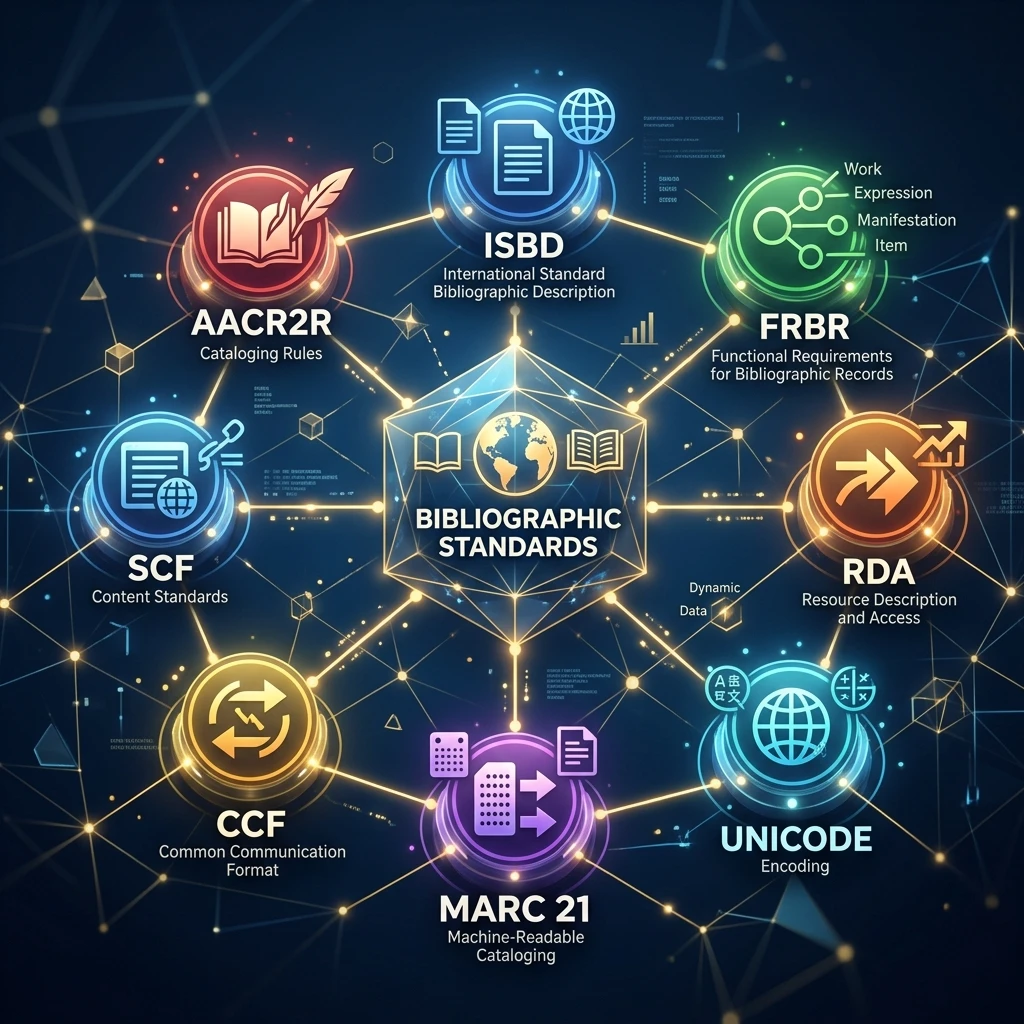
Cataloguing is the structural backbone of every library — and one of the most heavily tested, practical-intensive areas of UGC-NET, library job interviews, and day-to-day professional practice. Most learners know the theory but freeze when asked to actually construct a main entry, an added entry, a catalogue card, or a MARC 21 record for a real, complex document. This workshop bridges that exact gap.
Over 10 focused, hands-on sessions, you will practically construct main entries and added entries for 20 real-world special cases — from multi-author books to rare manuscripts — first as classical catalogue cards, and then as complete MARC 21 records, tag by tag.

Not just passive lectures — cataloguing entries are constructed live, step-by-step, during every session.
Every case study is built as a traditional AACR2 card and as a machine-readable MARC 21 record.
Covers every complex case scenario learners struggle with — in a clean, day-wise sequence.
In-depth coverage of ISBD, FRBR, RDA, CCF, and UNICODE — linking classical cataloguing to modern standards.
Targeted preparation for UGC-NET aspirants, viva-voce tests, and technical library interview rounds.
Printable worked-example notes and solution practice sheets (Card + MARC 21) shared after every class.
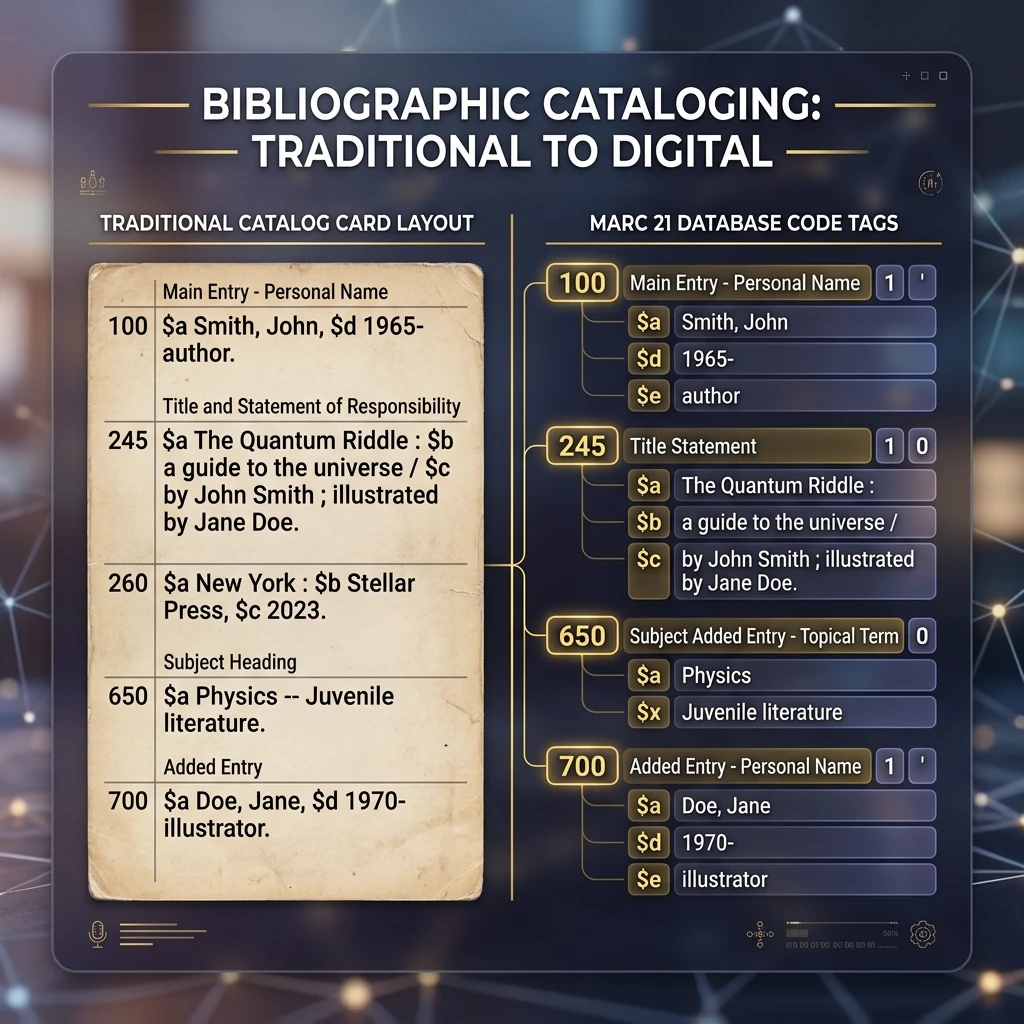
Traditional cataloguing cards provide structural clarity, while MARC 21 powers modern OPACs and Koha ILS software. In this workshop, you learn how every element on a card translates directly into MARC 21 tags (100, 245, 260, 300, 650, 700).
Every case worked out in two formats: traditional catalogue card + corresponding MARC 21 tagged record.
All key tags are practiced through hands-on entry construction across the 10 days.
Library cataloguing has transformed from physical card files to linked data, FRBR entity modeling, and RDA standards. Our workshop connects classical AACR2 rules directly with modern bibliographic standards.